
Ketovore Macros Explained
A practical kosher guide to protein, fat, carbs, meat-first meals, and how to make ketovore simple without turning food into a maths problem.
Ketovore macros can sound complicated, but the idea is simple: build meals around protein, keep carbs very low, and use fat for flavour, satisfaction, and energy. Unlike standard keto, ketovore is more meat-first. Unlike strict carnivore, it can allow small low-carb extras when they help you stay consistent.
For a kosher kitchen, this matters. Many keto recipes online depend heavily on cheese, cream, bacon, pork rinds, shellfish, or meat-and-dairy combinations. Those foods do not work for KosherVore. A kosher ketovore approach needs to keep meat and dairy separate, keep meat and fish separate, avoid non-kosher ingredients, and still make meals rich and satisfying.
The purpose of this guide is to make ketovore macros easier to understand. You do not need to live inside a tracking app forever. You need to understand what protein does, when fat helps, why carbs stay low, and how to build a plate that works in real life.
Quick Answer: What Are Ketovore Macros?
Ketovore macros usually mean high protein, moderate to high fat, and very low carbs. A practical starting point is to prioritise protein at every meal, keep carbs around 10g to 20g per day if that suits your body, and adjust fat based on hunger, energy, and goals.
What Are Macros?
Macros are the three main nutrients that provide energy and structure in your diet: protein, fat, and carbohydrates. On ketovore, you are not trying to hit a perfect mathematical formula every day. You are trying to understand what each macro does so you can build better meals.
Protein
Protein is the foundation of ketovore. It helps maintain muscle, supports fullness, and gives structure to your meals. In a kosher ketovore kitchen, protein usually comes from beef, chicken, lamb, eggs, kosher fish, turkey, and other kosher animal foods.
Fat
Fat adds flavour, richness, and satisfaction. It can come from the meat itself, chicken skin, schmaltz, tallow, olive oil, egg yolks, avocado, and dairy only when the meal is clearly dairy-based. In meat meals, KosherVore keeps richness kosher by using stock, reduction, rendered fat, pan juices, and good cooking technique instead of cream or butter.
Carbs
Carbs are kept low on ketovore. Some people include small amounts of avocado, cucumber, herbs, lemon, leafy greens, pickles, olives, or low-carb vegetables. Others stay much closer to carnivore, especially during a reset or elimination phase. The goal is not to add carbs for the sake of it. The goal is to use them carefully if they help your real-life eating plan.
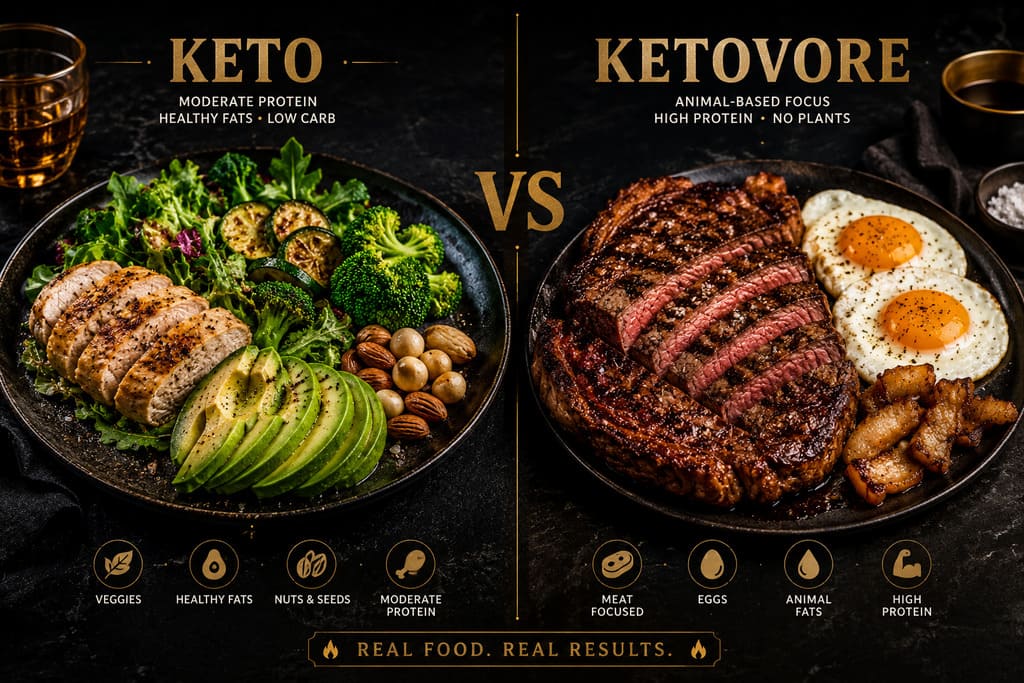
Keto Macros vs Ketovore Macros
Traditional keto often focuses on high fat, moderate protein, and low carbs. That can work for some people, but it can also lead beginners into a common trap: adding fat just to meet a number. Ketovore is more practical. It starts with protein first, then adds fat as needed.
This is especially useful if your goal is fat loss, blood sugar control, appetite control, or moving gradually toward carnivore. Instead of asking, “How much extra fat can I add?” the better question is, “Did I eat enough protein, and am I satisfied?”
Standard Keto
Keto usually allows more plant foods, nuts, low-carb baking, sweeteners, dairy, and keto substitutes. Carbs are often kept somewhere around 20g to 50g per day, depending on the person and their goals.
Ketovore
Ketovore is usually stricter with carbs and more focused on animal foods. Many people feel best around 10g to 20g of carbs per day, although this can vary. The plate is usually built around meat, eggs, poultry, or fish, with low-carb extras kept small and intentional.
Carnivore
Carnivore is the strictest version. It usually removes plant foods completely and focuses on animal foods only. KosherVore treats carnivore as a reset or elimination tool, not a religion. It can help you identify which foods trigger cravings, bloating, blood sugar swings, or other reactions.
New to KosherVore?
Start with the simple framework: Low-Carb → Keto → Ketovore → Carnivore. You do not need to jump straight into strict rules. Build the system that works for your body.
How Much Protein Should You Eat on Ketovore?
Protein should be the main focus of a ketovore meal. For most people, the simplest method is to include a solid portion of protein at each meal before worrying about fat or carbs. That may look like steak and eggs, burger patties, chicken thighs, lamb chops, salmon, tuna and eggs, or a ground beef skillet.
You do not need to make every meal enormous, but you do need enough protein to feel properly fed. If you finish a meal and feel hungry soon afterwards, your first check should usually be protein. Did the meal contain enough meat, eggs, poultry, or fish? Or was it mostly fat, sauce, vegetables, or low-carb extras?
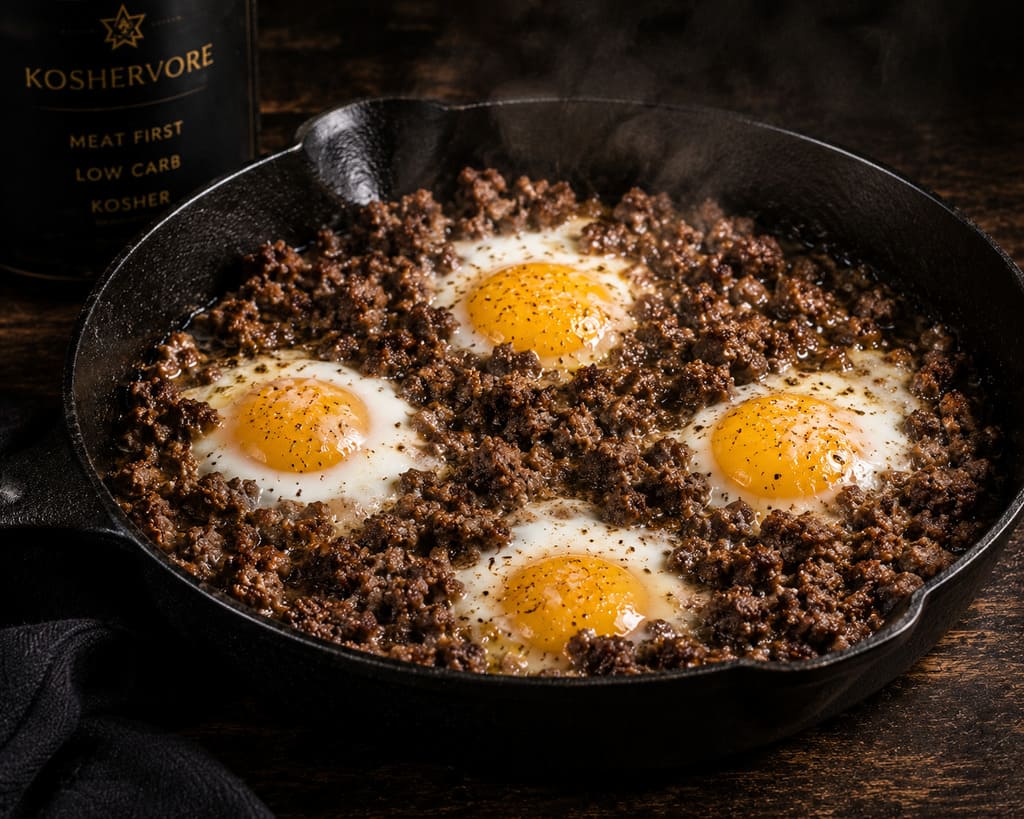
Simple Protein Examples
- Breakfast: eggs with steak strips or burger patties
- Lunch: chicken thighs with boiled eggs
- Dinner: ribeye, lamb chops, or ground beef bowl
- Fish meal: crispy salmon with olive oil and herbs
- Reset meal: beef patties, eggs, and bone broth
Why Protein Comes First
Protein is what makes ketovore different from a high-fat snack diet. A meal made from mostly fat may be high in calories but still not feel satisfying. A meal built around enough protein gives your body more structure and usually makes it easier to avoid grazing.
How Much Fat Should You Eat on Ketovore?
Fat is important, but it should not be forced. Many people hear “keto” and think they need to add large amounts of fat to every meal. Ketovore is different. Start with fatty cuts of meat or eggs, then add fat only if the meal needs it.
In kosher meat meals, avoid relying on dairy fats. Instead, use schmaltz, tallow, rendered pan fat, olive oil, egg yolks, reduced stock sauces, or the natural fat from the meat itself. This keeps the meal rich without creating kosher confusion.
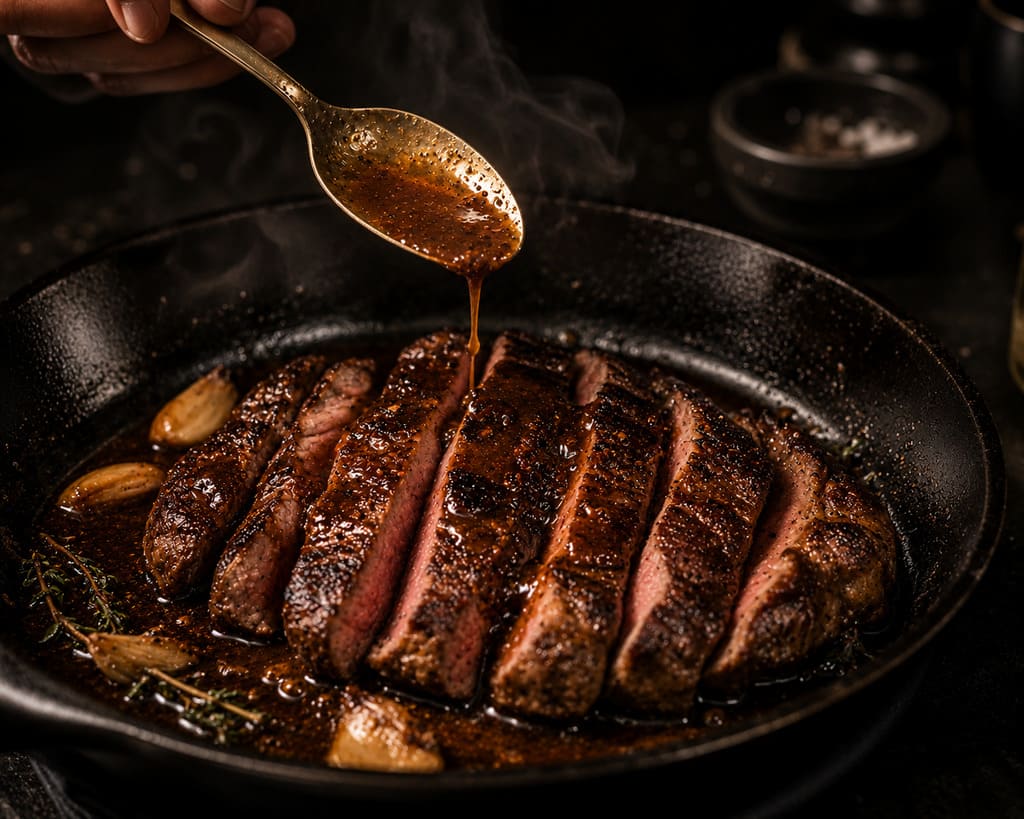
When to Add More Fat
You may need more fat if your meals feel dry, you are hungry soon after eating, or you are using very lean protein. For example, chicken breast may need added fat, while ribeye or lamb chops may already contain enough.
When to Use Less Fat
If your goal is fat loss, you may not need to add extra fat just to hit a number. Your body already has stored energy. The meal still needs to be satisfying, but you do not need to drink fat, add oil to everything, or turn every meal into a heavy sauce.
How Many Carbs Fit Ketovore?
Ketovore is usually lower-carb than standard keto. Many people use 10g to 20g of carbs per day as a practical range. Some go lower. Some allow more on certain days. The important part is that carbs should not take over the meal.
A ketovore plate is not a large salad with a little meat. It is a meat-first plate with small extras if they help. That could mean half an avocado, cucumber slices, herbs, lemon, olives, pickles, or a very small amount of low-carb vegetables.
Good Low-Carb Extras
- Avocado with eggs or fish
- Cucumber with tuna or boiled eggs
- Herbs and lemon for salmon
- Small amounts of leafy greens
- Olives or olive oil in dairy-free meals
- Pickles with burgers or eggs if tolerated
When to Go Lower Carb
If low-carb extras trigger cravings, bloating, snacking, or overeating, it may help to go closer to carnivore for a while. That does not mean those foods are “bad.” It means they may not be helpful for your current goal.
Ketovore Macros for Fat Loss
If fat loss is your goal, ketovore can be useful because it removes many foods that are easy to overeat. Meat and eggs are usually more filling than low-carb snacks, bars, desserts, and replacement foods. The simpler the food, the easier it is to notice real hunger.
A practical fat-loss approach is to prioritise protein, keep carbs low, and add enough fat to enjoy the meal without overdoing it. This does not mean eating dry chicken and suffering. It means using fat wisely instead of adding it automatically.
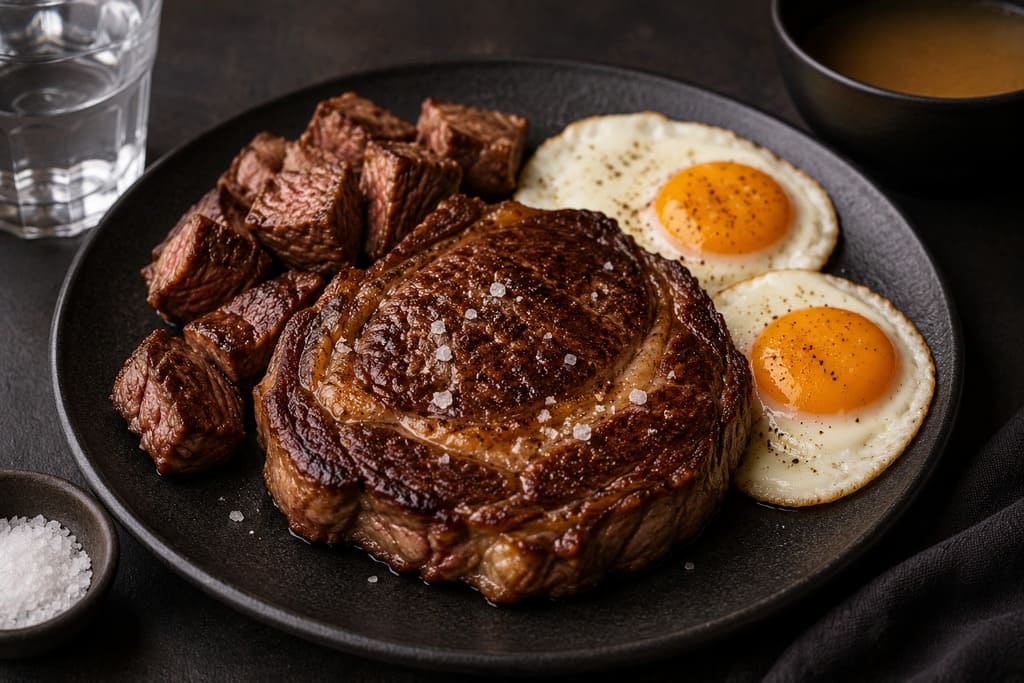
Fat Loss Plate Rule
Start with protein. Add enough fat so the meal tastes good and keeps you satisfied. Keep carbs small and intentional. Avoid using keto snacks, desserts, and nut flours as daily staples.
Ketovore Macros for Blood Sugar Control
Many people come to low-carb eating because they want steadier energy, fewer cravings, and better control around food. Carbs usually have the biggest impact on blood sugar, so reducing them can make meals feel more stable. Protein and fat also matter, but the first practical step is usually removing sugar, bread, pasta, rice, pastries, and high-carb snacks.
If you are using ketovore for blood sugar reasons, keep your meals simple and consistent. Track how you feel after different foods. Some people tolerate small amounts of avocado or vegetables well. Others do better closer to carnivore for a period of time.
Important Health Note
If you use medication or have medical concerns, work with your healthcare professional before making major diet changes, especially if you are reducing carbohydrates significantly.
How to Build a Ketovore Plate
The easiest way to build a ketovore plate is to follow a simple order. This keeps the meal clear, kosher, and realistic.
- Choose your protein first.
- Add natural fat or cooking fat if needed.
- Use stock, reduction, or pan sauce for richness.
- Add a small low-carb extra only if it helps.
- Keep the meal kosher and avoid mixing meat and dairy.
- Keep fish and meat separate.
Example Plate 1: Steak and Eggs
Protein comes from steak and eggs. Fat comes from egg yolks and rendered pan fat. Carbs are almost zero unless you add a small low-carb side.
Example Plate 2: Chicken Thighs and Stock Sauce
Protein comes from chicken thighs. Fat comes from skin and schmaltz. Richness comes from reduced chicken stock. This is a strong kosher ketovore meal without dairy.
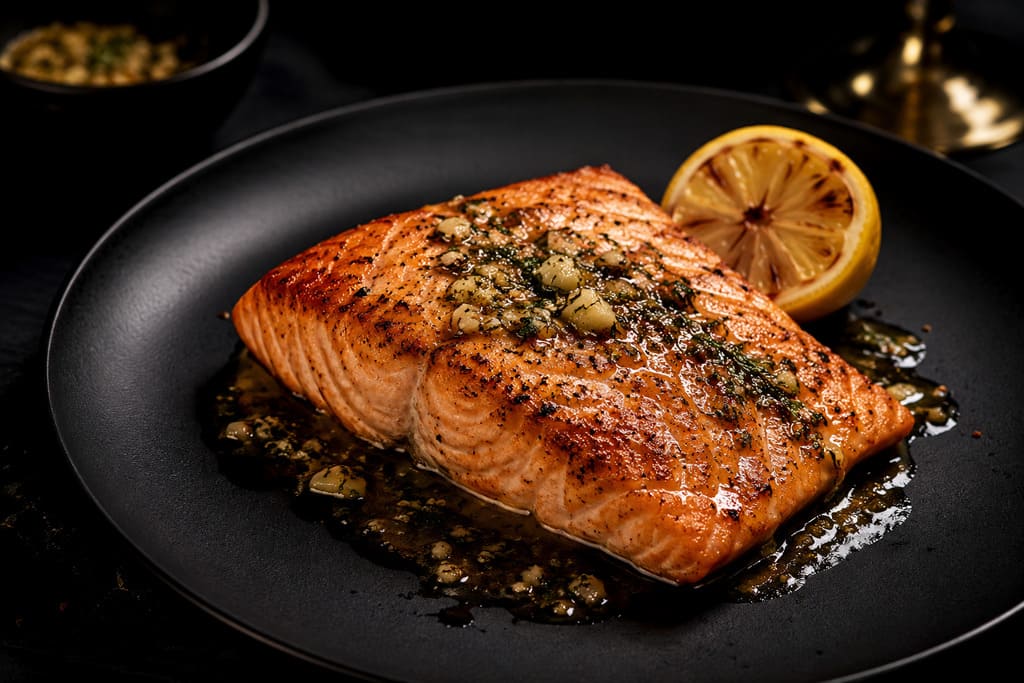
Example Plate 3: Salmon with Herb Oil
Protein comes from salmon. Fat comes from salmon itself and olive oil. Carbs stay very low with herbs, lemon, and seasoning. Fish should be kept separate from meat meals.
Common Ketovore Macro Mistakes
Eating Too Little Protein
This is the biggest mistake. Ketovore is meat-first. If your meals are mostly fat, sauces, snacks, or low-carb extras, they may not satisfy you properly.
Adding Fat Just Because It Is Keto
Fat is useful, but more is not always better. Add fat for flavour and satisfaction, not because an app tells you to force it.
Letting Keto Treats Take Over
Low-carb breads, sweeteners, and desserts can be useful occasionally, but they should not become the foundation of your diet. If they trigger cravings, use them carefully.
Forgetting Kosher Rules
Keep meat and dairy separate. Keep meat and fish separate. Use kosher ingredients and avoid anything that creates doubt. Ketovore should make kosher eating simpler, not more confusing.
Meal Prep Makes Macros Easier
You do not need to calculate every bite to make ketovore work. Preparing the right foods ahead of time makes your macros easier automatically. If your fridge has cooked steak, burger patties, chicken thighs, boiled eggs, and stock, you already have the base for many low-carb meals.
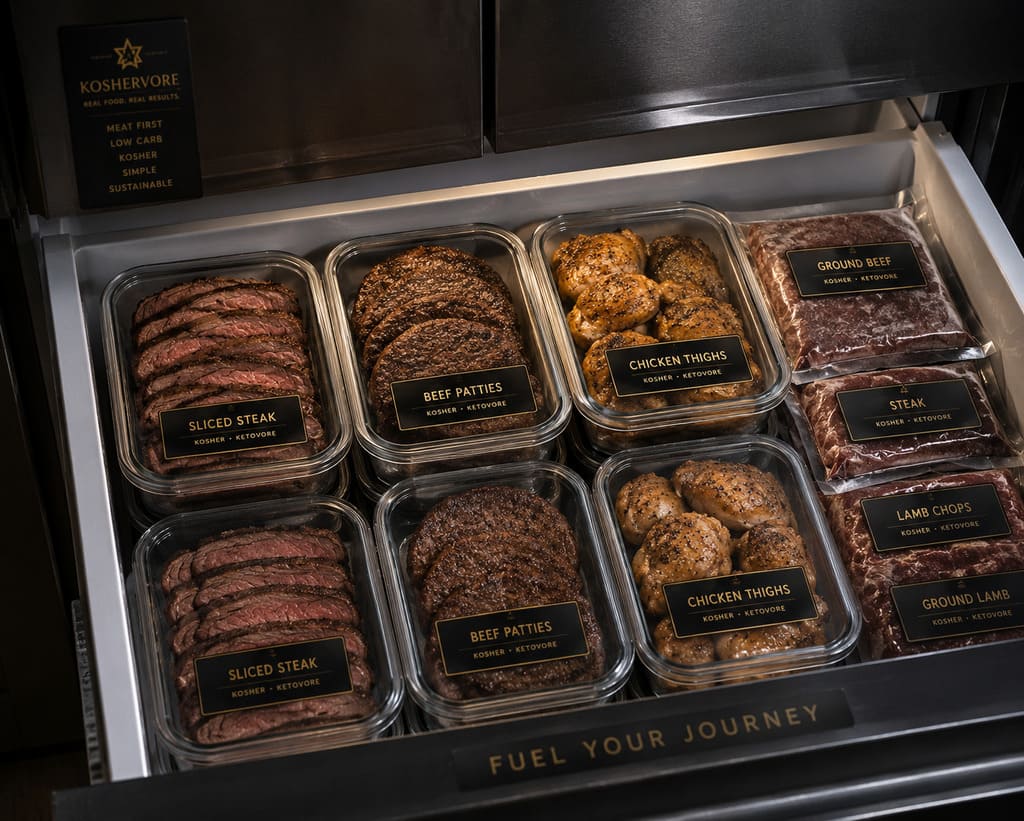
Meal prep also helps prevent emergency eating. When you are hungry and tired, you are less likely to make good choices if nothing is ready. A simple container of sliced steak or cooked ground beef can save the day.
Simple Weekly Prep
- Cook burger patties.
- Roast chicken thighs.
- Boil eggs if tolerated.
- Make a pot of broth or stock.
- Prepare one fish meal separately from meat meals.
- Keep salt, schmaltz, tallow, and olive oil available.
Want Simple Ketovore Meals?
Start with meat-first meals, add fat for flavour, keep carbs low, and use small extras only when they genuinely help.
Tracking vs Eating by Structure
Some people like tracking macros because it gives clear numbers. Others find tracking stressful and prefer a simple structure. Both can work. If you are new, tracking for a short time can teach you what foods contain. After that, you may be able to use a plate method instead.
Use Tracking If
- You are unsure how many carbs you are eating.
- You keep overeating low-carb extras.
- Your fat loss has stalled.
- You want to understand your normal portions.
Use Structure If
- You already know your food basics.
- You eat mostly meat-first meals.
- You keep carbs very low naturally.
- You want fewer food decisions.
Helpful KosherVore Guides
FAQ: Ketovore Macros Explained
What are ketovore macros?
Ketovore macros usually mean high protein, moderate to high fat, and very low carbs. The meal is built around animal foods first, with small low-carb extras if they help.
How many carbs should I eat on ketovore?
Many people use 10g to 20g of carbs per day as a practical range, but the right amount depends on your goals and tolerance.
Is ketovore higher protein than keto?
Usually, yes. Ketovore is more protein-focused than standard keto because the meal starts with meat, eggs, poultry, or fish rather than fat targets or replacement foods.
Can ketovore be kosher?
Yes. Kosher ketovore uses kosher meat, poultry, eggs, kosher fish kept separate from meat, and low-carb extras while avoiding pork, bacon, shellfish, meat and dairy mixing, and meat and fish mixing.
Do I need to track macros on ketovore?
Not always. Some people track at first, but many people can use a simple plate method: protein first, fat as needed, and carbs kept very low.
Final Thoughts: Do Not Overcomplicate Ketovore Macros
Ketovore macros are not about chasing perfect numbers every day. They are about understanding the role of protein, fat, and carbs so you can build meals that work. Start with protein. Keep carbs low. Add fat for satisfaction. Use technique to create richness. Keep everything kosher and practical.
The best ketovore meals are usually simple: steak and eggs, burger patties, chicken thighs, lamb chops, salmon, ground beef skillets, and bone broth. When you focus on real food, your macros become much easier to manage.
KosherVore is not about making low-carb eating more complicated. It is about removing confusion. Protein first, fat for flavour, carbs kept low, and kosher rules respected. That is enough to build a strong meat-first way of eating.
Ready to Build Simple Kosher Ketovore Meals?
Explore practical meat-first recipes, low-carb guides, and kosher cooking ideas made for real kitchens.