
Start Here
A practical beginner guide to eating low-carb, keto, ketovore, or carnivore while keeping everything fully kosher, simple, and realistic.
Welcome to KosherVore Kitchen. If you want to eat low-carb, keep food fully kosher, and stop feeling confused by keto, ketovore, and carnivore advice that was not written for a kosher kitchen, this is the best place to begin.
KosherVore is built around one simple idea: food should help you, not overwhelm you. You do not need to copy non-kosher keto recipes. You do not need bacon, pork, shellfish, cheeseburgers, butter on steak, or cream sauces with meat to make low-carb eating work. You need a clear path, practical meals, and a way to choose the right level for your body.
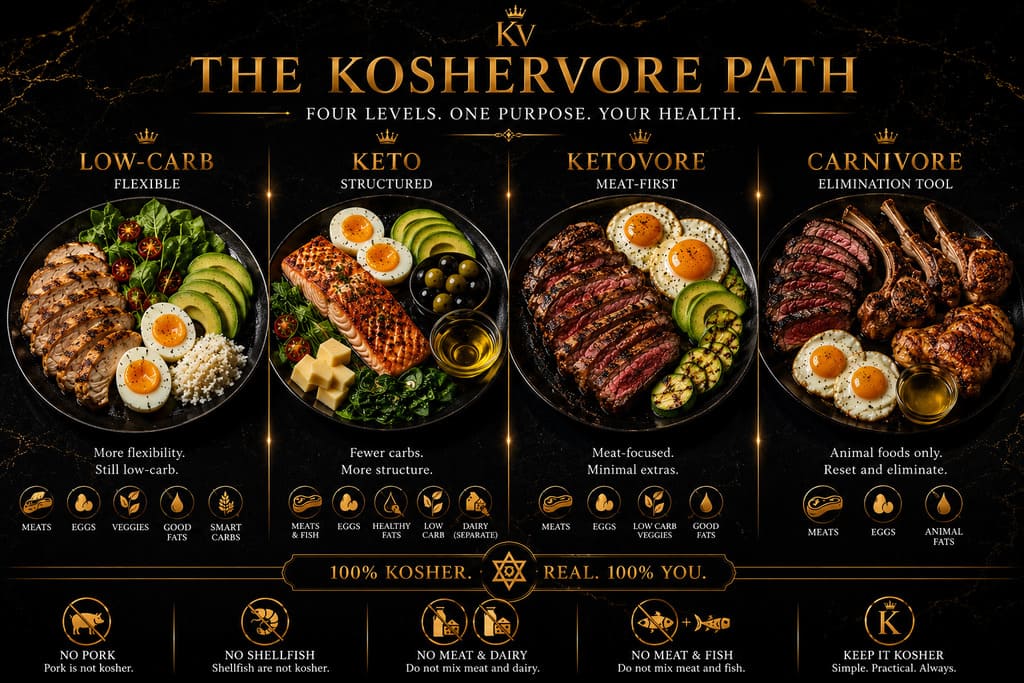
The KosherVore path is Low-Carb → Keto → Ketovore → Carnivore. Each level has a purpose. Low-carb helps you begin. Keto gives more structure. Ketovore simplifies meals around protein. Carnivore can be used as a reset or elimination tool when you need fewer variables.

The Simple KosherVore Path
Start simple. Add structure when needed. Simplify with meat-first meals. Use carnivore as a reset only when it helps.
- Low-Carb: the flexible starting point.
- Keto: a more structured low-carb approach.
- Ketovore: meat-first simplicity with low-carb flexibility.
- Carnivore: a reset or elimination tool when you need fewer variables.
Who This Start Here Page Is For
This page is for anyone who wants a practical kosher low-carb starting point without getting lost in diet arguments. You may be brand new to low-carb eating. You may already know keto but feel frustrated by recipes that mix meat and dairy. You may be curious about ketovore. You may want to try carnivore as a reset but do not know how to keep it kosher.
This guide is also for people who need a calm, step-by-step approach. You do not need to become strict overnight. You do not need to count every gram on day one. You do not need to decide today whether you are keto, ketovore, or carnivore forever. The better question is simpler: what level helps your next meal become cleaner, easier, and more satisfying?
If You Are Brand New
Start with low-carb. Remove the biggest problem foods first: sugar, bread, pasta, rice, potatoes, sweet drinks, and processed snacks. Build meals around kosher protein, simple fats, and low-carb sides.
If You Already Tried Keto
Use KosherVore to make keto more kosher and less complicated. Separate meat meals, dairy meals, and fish meals clearly. Focus on real food instead of endless keto treats and substitutes.
If You Feel Stuck
Ketovore or carnivore may help reduce food noise. A meat-first approach can make meals easier to repeat and can help you see which foods affect cravings, hunger, digestion, energy, or blood sugar response.
What Is KosherVore Kitchen?
KosherVore Kitchen is a practical kosher low-carb food system. It helps you understand how to eat fewer carbs, build meals around protein, keep everything kosher, and choose the level of restriction that fits your goals.
Some people need a gentle start. Some need more structure. Some need a reset. KosherVore gives you a path instead of forcing you into one label forever. That is why the site uses a progression: Low-Carb, Keto, Ketovore, and Carnivore.
Not Just Keto
Keto can be useful, but many keto recipes online rely heavily on dairy, cheese-based sauces, processed substitutes, sweeteners, and non-kosher ingredients. KosherVore keeps keto practical, kosher, and easier to repeat.
Not Just Carnivore
Carnivore can be powerful, especially as a reset, but it does not need to become your whole identity. KosherVore treats carnivore as a tool, not a food religion.
Just Kosher and Practical
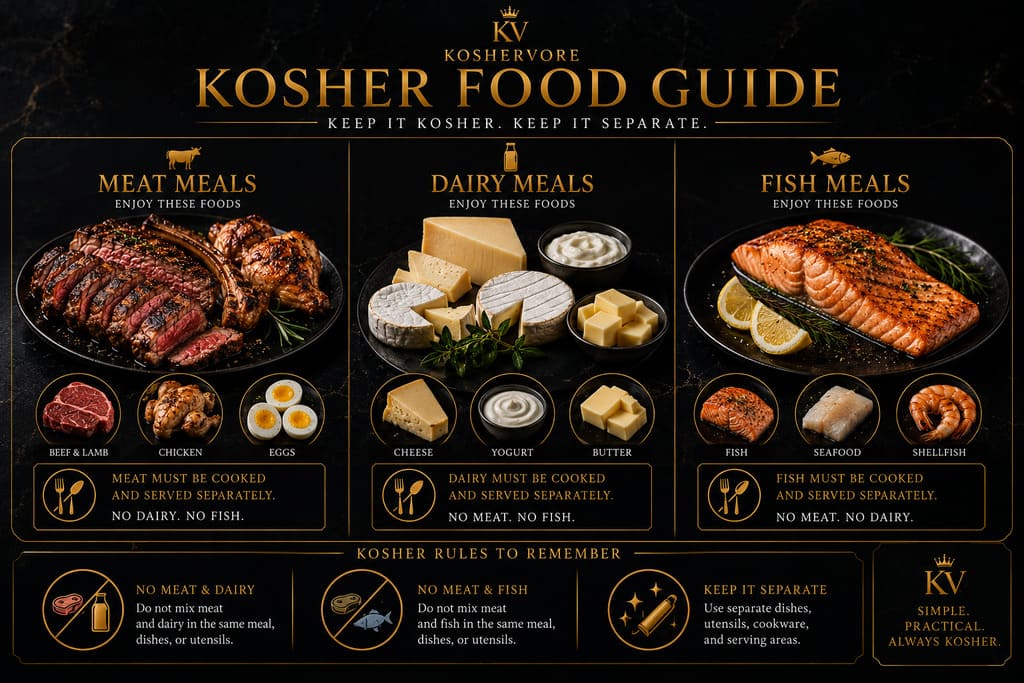
Every meal should make sense in a kosher kitchen. Meat meals stay meat. Dairy meals stay dairy. Fish is handled carefully and kept separate from meat. Ingredients should be clear, kosher, and realistic.
The KosherVore Roadmap in Plain English
The KosherVore roadmap is not meant to make food more complicated. It is meant to help you know what to do next. Each level removes some confusion and gives you a clearer structure.
Low-Carb: The Flexible Start
Low-carb is the easiest entry point for most people. It usually means reducing sugar, bread, pasta, rice, potatoes, sweets, sugary drinks, and processed snacks. It does not require perfection. It simply moves your food in a better direction.
A low-carb kosher meal may be grilled chicken with cucumber, tuna with boiled eggs, salmon with avocado, cottage cheese with low-carb vegetables in a dairy meal, or burger patties without the bun. The goal is not to make food strange. The goal is to remove the biggest carb sources and keep meals satisfying.
Keto: More Structure
Keto is a stricter form of low-carb. It usually keeps carbohydrates lower and uses fat more deliberately for energy and satisfaction. Keto can help some people control appetite, reduce cravings, and feel more stable.
The kosher challenge with keto is that many online keto recipes mix meat and dairy or depend on non-kosher shortcuts. KosherVore avoids that by keeping meat meals, dairy meals, and fish meals clearly separate.
Ketovore: Meat-First Simplicity
Ketovore is a meat-first approach. It keeps the simplicity of carnivore but allows some low-carb flexibility when it helps. A ketovore meal may include steak and eggs, chicken thighs, burger patties, lamb chops, salmon, avocado, cucumber, pickles, or small low-carb sides.
Carnivore: Reset When Needed
Carnivore is the strictest level. It focuses on animal foods and removes most or all plant foods for a period of time. At KosherVore, carnivore is treated as a reset or elimination tool. It can help you reduce food noise and identify what affects your body.
Start With the Level You Can Repeat
You do not need to start strict. Start with the level you can follow consistently, then move only as far as your body and life require.
Read the Full KosherVore PathLow-Carb vs Keto vs Ketovore vs Carnivore
Many beginners get stuck because the labels sound similar. The easiest way to understand them is to look at how much structure each one gives you. The more structure you add, the fewer food decisions you need to make. That can help, but it can also become too strict if you go too far too quickly.
Simple Comparison
- Low-Carb: best for reducing sugar and starch without becoming too strict.
- Keto: best for people who want clearer carb limits and stronger appetite control.
- Ketovore: best for people who want meat-first meals with a little low-carb flexibility.
- Carnivore: best used as a reset or elimination tool when you need maximum simplicity.
Which One Should You Choose?
Choose the easiest level that gives you progress. If low-carb works, stay there. If you need more structure, try keto. If keto becomes too snack-heavy or complicated, move toward ketovore. If you need to remove variables and calm cravings, a short carnivore reset may help.
The Goal Is Not to Be Extreme
The goal is not to prove how strict you can be. The goal is to eat in a way that helps your body, supports your goals, and fits your kosher kitchen.
The Foundation: Keep It Kosher
The first rule of KosherVore is simple: the food must stay kosher. Low-carb eating should not create confusion or compromise. A recipe that breaks kosher trust does not belong here.
This matters because much of the low-carb, keto, and carnivore content online was not written for kosher kitchens. It often includes bacon, pork, shellfish, cheeseburgers, butter on steak, cream sauces with chicken, or meat and fish combinations.
Meat Meals
Meat meals can include beef, lamb, chicken, turkey, eggs depending on your custom, broth, stock, rendered fat, pan juices, and low-carb vegetables. They should not include dairy ingredients such as cheese, cream, butter, or yoghurt.
Dairy Meals
Dairy meals can include eggs, cheese, yoghurt, cream, butter, avocado, low-carb vegetables, and other kosher dairy-friendly foods. Dairy meals should stay separate from meat meals.
Fish Meals
Kosher fish such as salmon, tuna, sardines, and white fish can fit beautifully into low-carb and keto eating. Fish should be kept separate from meat meals. Fish meals can be lighter, practical, and very useful when you want variety.
No Non-Kosher Shortcuts
No bacon, no pork, no shellfish, no pork rinds, and no unclear ingredients. Low-carb does not need non-kosher shortcuts to work.
The Foundation: Keep It Simple
The second rule is simplicity. Most people do not fail because they lack complicated recipes. They fail because the plan becomes too difficult to repeat.
KosherVore focuses on meals you can actually cook: eggs, tuna, chicken, beef, lamb, salmon, broth, avocado, cucumber, low-carb vegetables, simple dairy meals, and practical fats.
Simple Beats Perfect
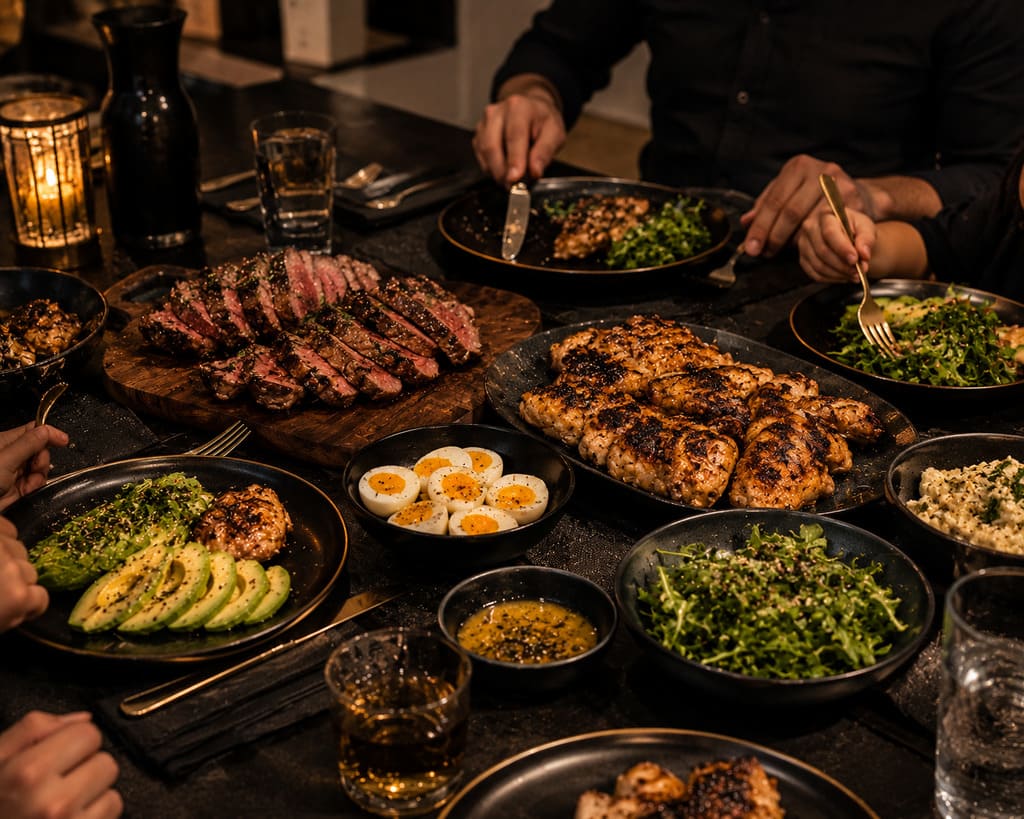
You do not need a perfect 30-day meal plan to begin. You need a few meals you can repeat without stress.
Protein First
Build meals around protein. This is the easiest way to stay satisfied and reduce snacking. Protein can come from beef, chicken, lamb, eggs, kosher fish, turkey, or dairy meals when the meal is dairy-based.
Use Fat for Flavour
Fat should make food satisfying. In meat meals, use pan juices, stock, schmaltz, tallow, olive oil, and proper cooking technique. In dairy meals, cheese, cream, butter, and yoghurt can be used separately.
Repeat What Works
Repetition is not failure. Repetition is how you build consistency. If eggs and tuna work for lunch, use them. If chicken thighs and cucumber make dinner easy, repeat them. If burger patties and eggs help you stay on track, keep them in the rotation.
How to Build a Kosher Low-Carb Plate
A good KosherVore plate does not need to be complicated. Start with protein, add the right fat, then choose whether you need a low-carb side.
Step 1: Choose Your Protein
Choose beef, chicken, lamb, turkey, eggs, kosher fish, tuna, salmon, or a dairy-based protein if it is a dairy meal.
Step 2: Add Fat for Satisfaction
Use the fat that fits the meal. Meat meals can use pan juices, schmaltz, tallow, olive oil, or broth reductions. Dairy meals can use butter, cream, cheese, yoghurt, avocado, or olive oil.
Step 3: Add Low-Carb Extras If Needed
Depending on your level, add cucumber, avocado, pickles, salad, green beans, courgette, cauliflower, herbs, or lemon. If you are doing a stricter carnivore reset, skip the extras.
Step 4: Keep the Meal Clear
Do not mix meat and dairy. Do not mix meat and fish. Keep ingredients simple and easy to understand.
What to Eat First
If you are starting today, do not overthink it. Build your first meals around simple kosher foods. Your first goal is not perfection. Your first goal is to stop relying on sugar, bread, pasta, rice, potatoes, and snack foods as the centre of the day.
Easy Low-Carb Foods
- Eggs
- Tuna
- Chicken thighs
- Grilled chicken
- Beef burgers without buns
- Steak
- Salmon
- Avocado
- Cucumber
- Low-carb vegetables
- Olive oil
- Broth or stock
Foods to Reduce First
- Sugar
- Bread
- Pasta
- Rice
- Potatoes
- Cakes and biscuits
- Sweet drinks
- Processed snacks
- High-carb breakfast cereals
Keep It Realistic
The goal is not to empty your kitchen overnight. The goal is to make the next meal easier, cleaner, and more satisfying. If you change breakfast first, that counts. If you remove sweet drinks first, that counts. If you build one good meat-first dinner, that counts.
Simple Meal Examples
Here are practical meal examples that fit the KosherVore path. Use them as ideas, not as strict rules.
Low-Carb Meal
Grilled chicken with cucumber salad, avocado, olive oil, and a small low-carb vegetable side. This is flexible, simple, and a strong beginner meal.
Keto Meal
Salmon with eggs, avocado, olive oil, and leafy greens. Keep fish separate from meat meals. This type of meal gives structure without feeling too restrictive.
Ketovore Meal
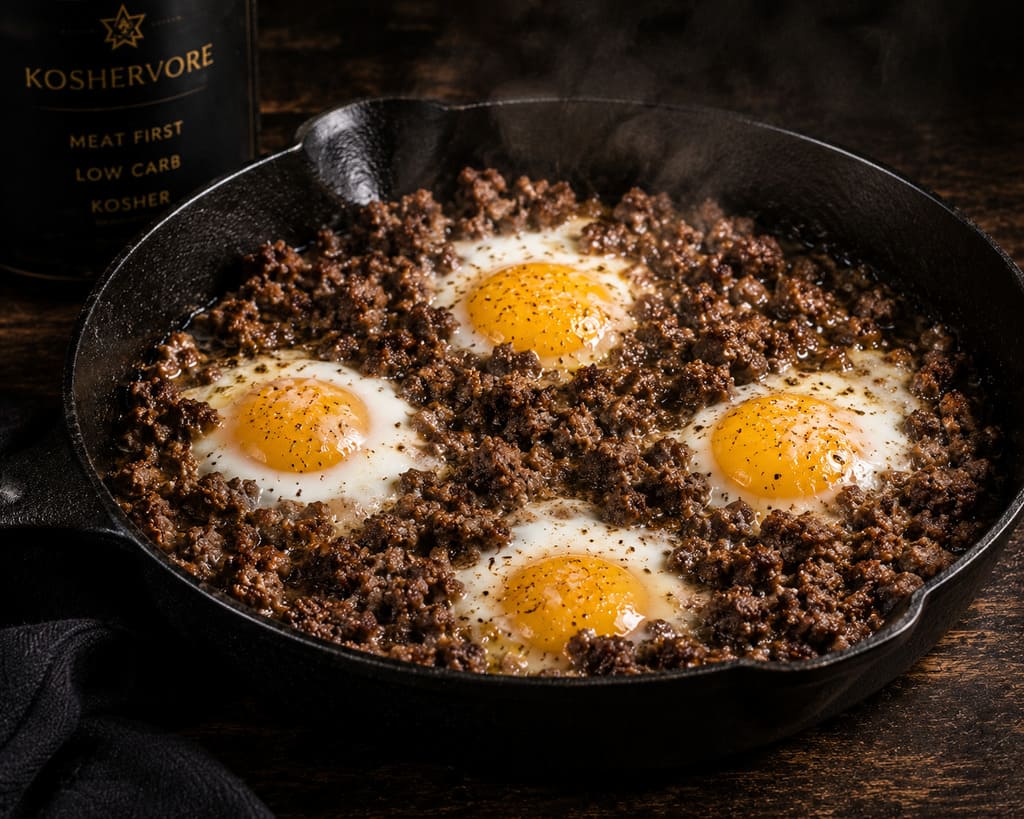
Burger patties with eggs and pickles, or steak with eggs and a small low-carb side. The protein is the centre of the plate, and the extras stay small.
Carnivore Reset Meal
Beef patties, eggs if tolerated, broth, salt, and simple animal fats. This removes most variables and keeps the meal extremely simple for a short reset or elimination phase.
Beginner Shopping List
A good shopping list makes the first week easier. Do not buy too many complicated ingredients at the beginning. Choose simple foods you can cook without stress.
Meat Meal Basics
- Beef mince or burger patties without fillers
- Steak or roast beef
- Chicken thighs or chicken legs
- Lamb chops or lamb mince
- Eggs if they fit your meal plan and custom
- Broth, stock, or bones for soup
- Salt, simple herbs, and clean spices
Fish Meal Basics
- Salmon
- Tuna
- White fish
- Sardines if kosher certified
- Cucumber, avocado, lemon, and olive oil
Dairy Meal Basics
- Cheese
- Greek-style yoghurt if tolerated
- Cottage cheese
- Butter
- Cream
- Eggs
- Low-carb vegetables
First 7 Days on KosherVore
The first week should be simple. Do not chase variety too early. Repetition helps you learn what satisfies you.
Day 1: Remove the Obvious Carbs
Start by removing sugar, bread, pasta, rice, potatoes, sweet drinks, and processed snacks. Build your meals around protein.
Day 2: Build Two Repeatable Meals
Choose two meals you can repeat easily. For example, eggs and avocado for a dairy or pareve-style meal, and chicken thighs with cucumber for a meat meal.
Day 3: Add Better Fats
Use fats that fit the meal. Meat meals can use pan juices, tallow, schmaltz, or olive oil. Dairy meals can use butter, cream, cheese, or yoghurt.
Day 4: Watch Hunger
Notice whether your meals keep you full. If you are constantly hungry, you may need more protein, more fat, or fewer snack-style meals.
Day 5: Simplify Dinner
Make dinner simple enough to repeat. Burger patties, steak, chicken thighs, salmon, or eggs can all work depending on the meal type.
Day 6: Plan for Shabbat or Family Meals
Think ahead. Choose the foods that fit your level and avoid relying on willpower when the table is full of high-carb options.
Day 7: Review What Worked
Do not judge the week by perfection. Ask what helped. Which meals kept you full? Which foods triggered cravings? Which meal was easiest to repeat?
First 30 Days on KosherVore
The first month is where the system starts to become normal. You are not trying to master everything at once. You are building a repeatable structure.
Week 1: Remove and Replace
Remove the biggest carb sources and replace them with simple kosher meals. Focus on protein first, then fat, then low-carb extras.
Week 2: Choose Your Level
Decide whether low-carb is enough or whether you need more structure. If cravings are still strong, keto may help. If keto feels too snack-heavy, ketovore may simplify things.
Week 3: Strengthen Your Routine
Repeat meals that work. Build a shopping list. Prepare food before you are hungry. Keep your kitchen aligned with your goals.
Week 4: Review and Adjust
Look at hunger, cravings, energy, digestion, weight, blood sugar response if you monitor it, and how realistic the plan feels. Then adjust the level rather than quitting completely.
How to Know Which Level Is Right for You
The right level is the one that gives you progress without creating unnecessary stress. Some people do beautifully with low-carb. Others need keto. Some feel best with ketovore. Others use carnivore briefly as a reset.
Stay Low-Carb If
- You are making progress.
- Your cravings are improving.
- You can still enjoy family meals.
- You do not need stricter rules yet.
Move to Keto If
- You want clearer carb limits.
- You need stronger appetite control.
- You keep drifting back to starches and sugar.
- You feel better with structure.
Move to Ketovore If
- Keto snacks are taking over.
- You want fewer food decisions.
- You feel better with more protein.
- You want meat-first simplicity without going fully carnivore.
Try Carnivore If
- You want a short reset.
- You need an elimination tool.
- You feel overwhelmed by too many food choices.
- You want to test which foods affect you.
How to Handle Cravings
Cravings are one of the biggest reasons people struggle. The answer is not always more willpower. Often the answer is better meal structure.
Eat Enough Protein
A tiny low-carb meal may not be enough. Build meals around protein first so your body feels fed.
Be Careful With Sweeteners
Low-carb sweeteners may fit for some people, but they can keep cravings alive for others. If cravings stay strong, remove sweeteners for a while and watch what happens.
Reduce Snack Foods
Keto bars, keto breads, keto cookies, and low-carb desserts may be useful occasionally, but they should not become the centre of your plan.
Use Ketovore When Food Noise Is High
If you are constantly negotiating with yourself about snacks, ketovore may help. Meat-first meals reduce decisions and often make appetite easier to understand.
How to Handle Shabbat and Family Meals
Shabbat and family meals can feel difficult because the table often includes challah, kugel, potatoes, desserts, and other high-carb foods. KosherVore does not require you to disappear from family life. It asks you to plan clearly.
Choose Your Main Foods First
Look for protein first. Chicken, meat, fish, eggs, or a dairy meal can all work depending on the meal. Then add low-carb sides if they fit your level.
Decide Before the Meal
Do not wait until you are hungry and surrounded by food to decide your plan. Choose ahead of time what you will eat and what you will skip.
Do Not Turn the Table Into a Debate
You do not need to explain every choice. Keep it calm. Choose the foods that work and move on.
Keep Kosher Separation Clear
Meat meals stay meat. Dairy meals stay dairy. Fish stays separate from meat. This matters even when you are focused on low-carb or keto goals.
Common Beginner Mistakes
Trying to Be Perfect
Perfection makes people quit. Progress is more useful. A better breakfast, a better dinner, or one week without sweet drinks can be a strong beginning.
Eating Too Little Protein
Many people reduce carbs but forget to build meals around protein. A small salad with a tiny amount of chicken may be low-carb, but it may not satisfy you.
Copying Non-Kosher Keto Recipes
Do not copy recipes that rely on bacon, pork, shellfish, cheeseburgers, cream sauces with meat, or butter on steak. KosherVore works because it is built for a kosher kitchen from the beginning.
Using Too Many Keto Treats
Keto treats can keep the snack habit alive. They may be fine occasionally, but they should not replace real meals.
Going Too Strict Too Fast
Some people jump straight to carnivore and burn out. You can start with low-carb and move stricter only when needed.
What to Do If You Get Stuck
Getting stuck does not mean the whole plan has failed. It usually means something needs adjusting.
If Hunger Is High
Increase protein, check your fat intake, and reduce snack-style meals. Real meals usually work better than grazing.
If Cravings Are High
Remove sweeteners, keto treats, nuts, and replacement foods for a while. Build meals around meat, eggs, fish, or simple dairy meals instead.
If Weight Loss Stops
Look at portions, snacks, dairy, nuts, sweeteners, and how often you are eating. Plateaus are common and can often be improved by simplifying.
If You Feel Overwhelmed
Return to the simplest version: protein first, kosher rules, low-carb sides if needed, repeat meals that work.
How to Use This Website
KosherVore Kitchen is built as a path. You do not need to read everything in one day. Use the site based on what you need right now.
Use the Guides
Start with the main guides if you need clarity. Read the Low-Carb Guide, What Is Keto?, What Is Ketovore?, and Carnivore Guide.
Use the Recipes
Use Recipes when you need practical food ideas. Look for simple meals you can repeat.
Use Reset Tools Carefully
If you feel stuck or overwhelmed, read about Carnivore Without Bacon and Reintroducing Foods After Carnivore.
Final Thoughts
Starting is usually the hardest part because there is so much conflicting advice. One person says keto is best. Another says carnivore is the only answer. Another says low-carb is enough. The truth is that each level can be useful when used properly.
KosherVore gives you a path instead of pressure. Start with low-carb if you need flexibility. Use keto when you need structure. Try ketovore when you want meat-first simplicity. Use carnivore when you need a reset.
Keep the food kosher. Keep the meals simple. Build around protein. Use fat for flavour. Pay attention to how your body responds. Repeat what works.
You do not need to solve everything today. You only need to make the next meal clearer.
Start Your KosherVore Journey
Begin with simple kosher low-carb meals, learn the path, and choose the level that works for your body and real life.