
The KosherVore Foundation
From Low-Carb to Carnivore
Find what works for your body — the kosher way.
Low-carb, keto, ketovore, and carnivore are not competing diets. They are different levels of simplicity. The KosherVore approach helps you move through them in a practical, kosher, real-life way.
This guide explains how each level works, what to eat, what to avoid, and how to use the journey from low-carb to carnivore without turning food into a religion.
Some people stay low-carb for years and feel fantastic. Others need tighter structure because cravings, appetite, blood sugar swings, or emotional eating keep pulling them back into old habits. Some people discover that simpler, meat-first eating helps them think less about food altogether. Others use carnivore temporarily as a reset before reintroducing foods carefully.
KosherVore was built around the idea that there is no single perfect level for everyone. The best plan is the one you can actually live with consistently while staying fully kosher and feeling physically better.
The journey from low-carb to carnivore is not about becoming more extreme. It is about understanding your own body better. The goal is not perfection. The goal is progress, consistency, and sustainability.

The KosherVore Philosophy
Not a diet religion. A practical framework.
Low-carb, keto, ketovore, and carnivore are tools. You move between them based on your goals, health, lifestyle, and current level of control around food.
The Four KosherVore Levels
- Low-Carb: Reduce processed carbohydrates and improve food quality.
- Keto: Lower carbohydrates enough to support fat burning and appetite control.
- Ketovore: Simplify meals around protein and animal foods.
- Carnivore: Use animal-based eating as a reset and elimination tool.
What Stays Consistent
- Keep it fully kosher.
- Prioritise protein.
- Use fat for flavour and satisfaction.
- Reduce ultra-processed foods.
- Build meals around real food.
- Keep meals practical and repeatable.
What Is Low-Carb?
Flexible. Sustainable. Easy to begin.
Low-carb simply means reducing sugar, refined flour, sweet drinks, and processed carbohydrates while building meals around real food. It is often the easiest place to start because it does not require perfection.
For many people, low-carb is the first step away from constant snacking, cravings, and energy crashes. Instead of building a plate around bread, pasta, cereal, potatoes, and dessert, you build it around protein, fat, and simple whole foods.
- Meat
- Chicken
- Fish
- Eggs
- Low-carb vegetables
- Healthy fats
- Small amounts of fruit
- Dairy when it fits the meal and kosher rules
Usually: 50g–100g carbs daily.
Best for: Beginners, general health, weight control, reducing processed foods, and learning how your body responds to fewer carbs.
Key idea: You do not need perfection to improve your health. A better breakfast, a simpler lunch, and fewer snacks can already make a big difference.

What Is Keto?
Low enough carbs to encourage fat burning.
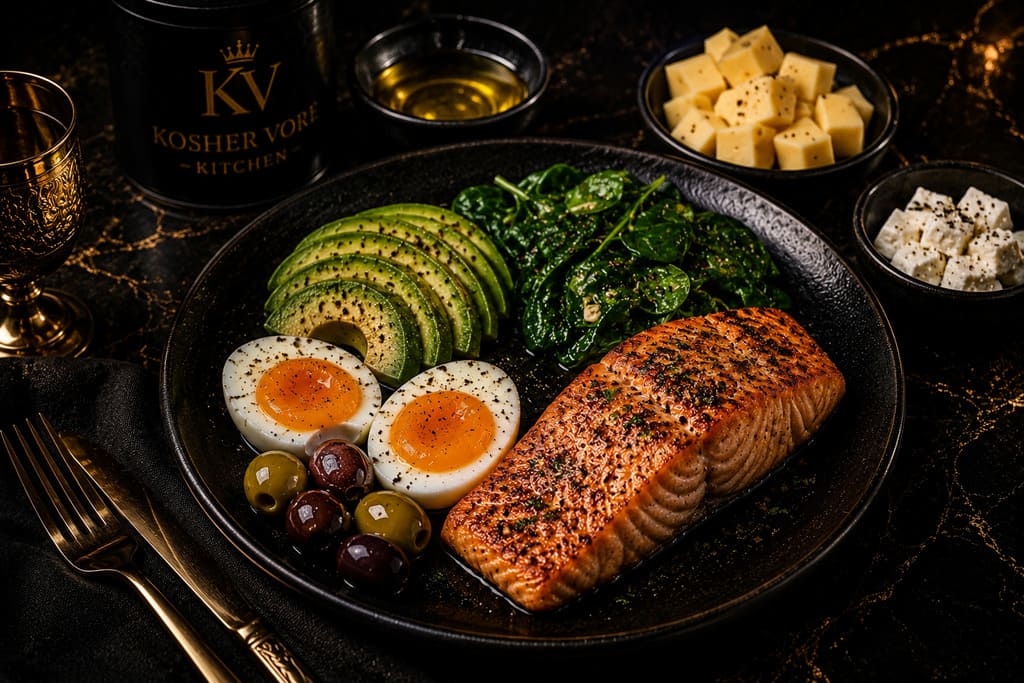
Keto takes low-carb further by reducing carbohydrates enough that the body relies more on fat for fuel. It is more structured than low-carb, but still flexible enough for real life.
The main goal is to keep carbs low, protein steady, and fat satisfying. Keto should not mean forcing down fat for no reason. Fat is used for flavour, fullness, and cooking technique.
- Meat
- Eggs
- Fish
- Avocados
- Olive oil
- Cheese and dairy in dairy meals
- Low-carb vegetables
- Simple sauces made from stock, reduction, and fat
Usually: 20g–50g carbs daily.
Best for: Weight loss, cravings, appetite control, stable energy, and people who want clear rules without removing every plant food.
Key idea: Keto gives structure without removing all flexibility. It is often the strongest middle ground for everyday kosher low-carb eating.
Want a Simple Starting Point?
Start with low-carb, build strong protein-based meals, then tighten the plan only if you need more appetite control or simplicity.
What Is Ketovore?
Meat-first eating with fewer ingredients.
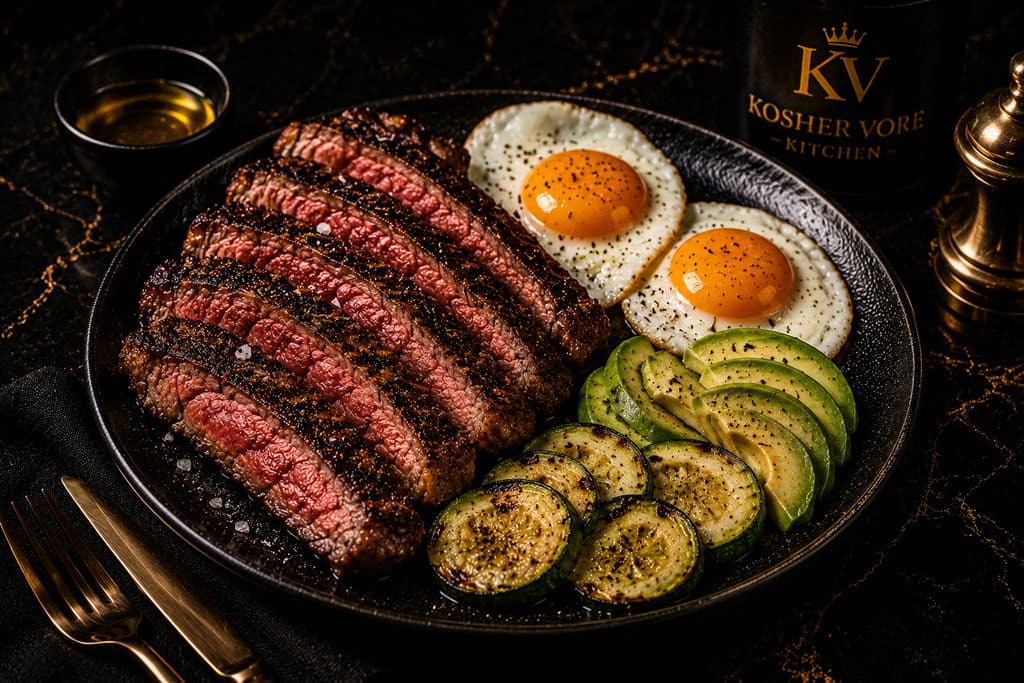
Ketovore sits between keto and carnivore. It is meat-first, simple, and lower in plants than standard keto, but not as strict as carnivore.
Most meals are built around beef, lamb, chicken, eggs, fish, and animal fats, with small amounts of low-carb vegetables, avocado, olives, pickles, or dairy when appropriate.
Usually: 10g–20g carbs daily.
Best for: Simplicity, consistency, reducing food noise, easier meal planning, and moving closer to carnivore without going all in.
Key idea: Less variety often makes eating easier. Ketovore is not about being extreme. It is about making meals simple enough to repeat without stress.
What Is Carnivore?
Animal foods only.
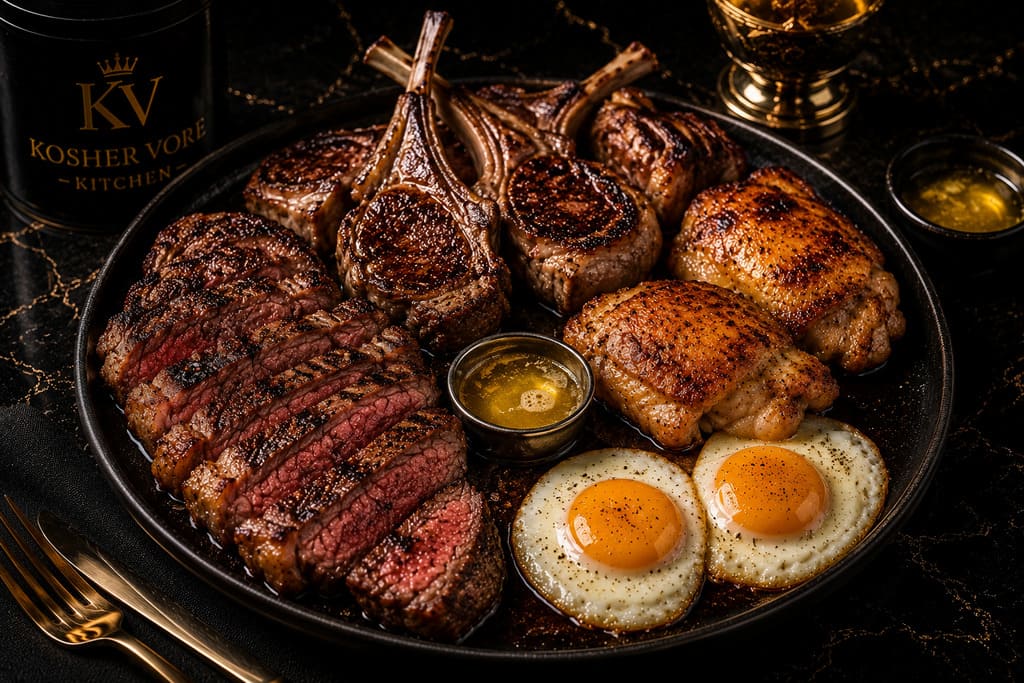
Carnivore removes plant foods completely for a period of time. In the KosherVore system, carnivore is not treated as a permanent rule for everyone. It is mainly used as an elimination and reset tool.
A kosher carnivore approach can include beef, lamb, chicken, turkey, eggs, and animal fats. Fish can also be used, but in kosher practice fish and meat should not be eaten together on the same plate.
- Beef
- Lamb
- Chicken
- Turkey
- Fish as a separate meal
- Eggs
- Animal fats
- Salt and simple seasoning if tolerated
Best for: Elimination diets, finding food triggers, digestive issues, reducing decision fatigue, and simplifying eating completely.
Key idea: Carnivore is not about restriction forever. It is a tool to help identify what affects your body.
Ready to Start Your KosherVore Path?
Explore simple kosher low-carb recipes, meat-first guides, and practical tools for moving from low-carb to carnivore.