
KosherVore Guide Related: Reintroducing Foods After Carnivore. Related: Ketovore Macros Explained.
Easy low-carb Meals: Simple Kosher Ideas for Real Life
Practical low-carb meals built around kosher protein, healthy fats, simple prep, and real food without confusion.
Easy low-carb meals do not need to be complicated, expensive, or full of strange substitute ingredients. The best meals are usually the simplest ones: a good protein, enough fat for flavour and satisfaction, and a cooking method that makes the food taste rich without needing sugar, bread, pasta, or dairy-heavy sauces.
At KosherVore Kitchen, the goal is practical low-carb eating that still works inside a kosher kitchen. That means no mixing meat and dairy, no shortcuts that create doubt, and no reliance on ingredients that do not fit the way you actually cook. Whether you are starting with low-carb, moving into keto, trying ketovore, or using carnivore as a reset, these meal ideas are designed to be simple enough for real life.
What Makes a Low-Carb Meal Easy?
An easy low-carb meal starts with a clear protein, uses simple fats for richness, keeps extras minimal, and avoids complicated replacement foods. Instead of trying to recreate every high-carb meal, focus on meals that naturally work: steak and eggs, chicken thighs, burger patties, salmon, ground beef bowls, bone broth, and simple meal prep containers.
Why Simple Low-Carb Meals Work Better
Many people start low-carb with excitement, then get overwhelmed by recipes that need too many ingredients. Almond flour, coconut flour, sweeteners, gums, binders, sauces, and specialty products can be useful sometimes, but they should not become the foundation of your meals.
The KosherVore approach is easier: start with protein. Then add fat and technique. This makes meals more filling, more repeatable, and easier to keep kosher. When the protein is the centre of the meal, you do not need to build the plate around bread, rice, potatoes, pasta, or sugary sauces.
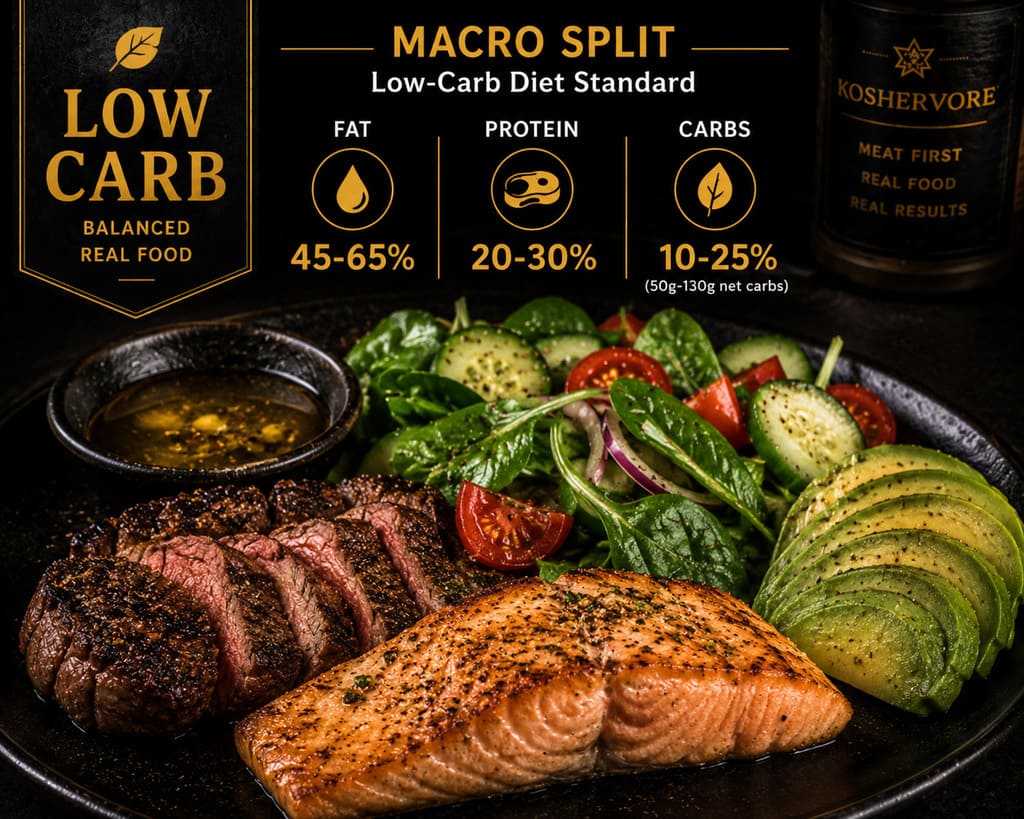
Easy Low-Carb Breakfast Ideas
Breakfast is one of the easiest meals to simplify. Instead of sweet cereals, toast, or pastries, build breakfast around eggs and protein. It keeps you full longer and helps remove the constant snacking that often comes from high-carb mornings.
Steak and Eggs
Steak and eggs is one of the most reliable low-carb meals because it feels satisfying without needing any bread. Use leftover steak from dinner, slice it thinly, and warm it gently in a pan. Fry eggs in the same pan with a little tallow, schmaltz, or olive oil.
This meal works for low-carb, keto, ketovore, and even stricter carnivore-style days if you keep it very simple.
Burger Patties and Eggs
Burger patties are one of the easiest meal prep foods. Make a batch at the beginning of the week and keep them ready in the fridge. In the morning, reheat two patties and add eggs. It is fast, filling, and does not require a recipe.
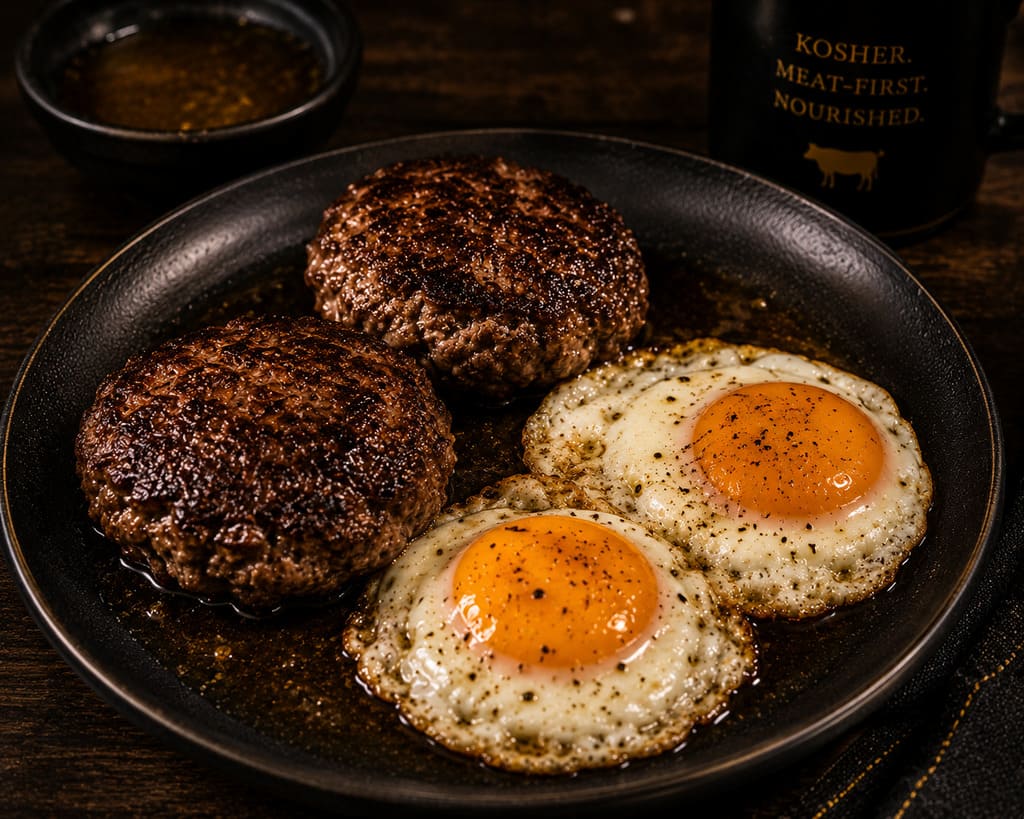
Chicken Thigh Breakfast Plate
Chicken thighs are not only for dinner. A leftover crispy chicken thigh with eggs makes a strong low-carb breakfast. The skin and rendered fat give richness, so you do not need cheese or cream to make the meal satisfying.
Easy Low-Carb Lunch Ideas
Lunch should be simple enough that you can repeat it without thinking too much. If lunch is too complicated, it becomes tempting to grab bread, crackers, snack bars, or whatever is easiest. Low-carb works better when cooked proteins are already waiting for you.
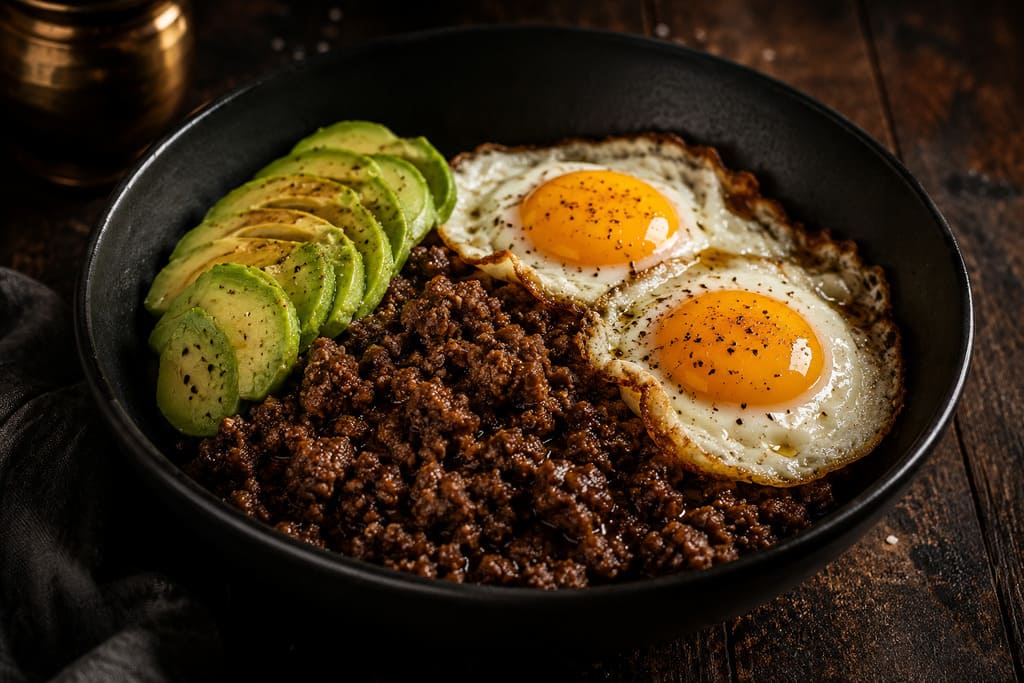
Ground Beef Bowl
A ground beef bowl is one of the most practical easy low-carb meals. Brown ground beef in a skillet until it develops crispy edges, then season with salt, pepper, garlic powder, paprika, or a simple spice blend. Add eggs if you want more protein, or add a small low-carb extra like cucumber, avocado, or herbs if that fits your plan.
Chicken Thigh Lunch Box
Chicken thighs are ideal for meal prep because they stay juicy after reheating. Cook several at once, keep them in containers, and pair them with boiled eggs, a little stock reduction, or a small low-carb side. This is a very realistic lunch for busy days.
Tuna and Eggs
For a fast kosher low-carb lunch, use canned tuna with boiled eggs, olive oil, salt, and pepper. It is not fancy, but it works. It is affordable, quick, and easy to keep in the pantry for days when you have nothing prepared.
Make Low-Carb Easier
Start with one protein, one fat, and one simple cooking method. That is enough to build a meal without overthinking it.
Easy Low-Carb Dinner Ideas
Dinner is where low-carb meals can feel rich and premium without becoming difficult. The trick is learning how to build flavour without relying on sugar, flour, pasta, or dairy sauces in meat meals.
Ribeye with Pan Sauce
Cook a kosher steak in a hot pan until browned. Remove it to rest, then add a splash of beef stock to the pan. Scrape up the browned bits and reduce the liquid until glossy. Add a little tallow or schmaltz at the end for richness.
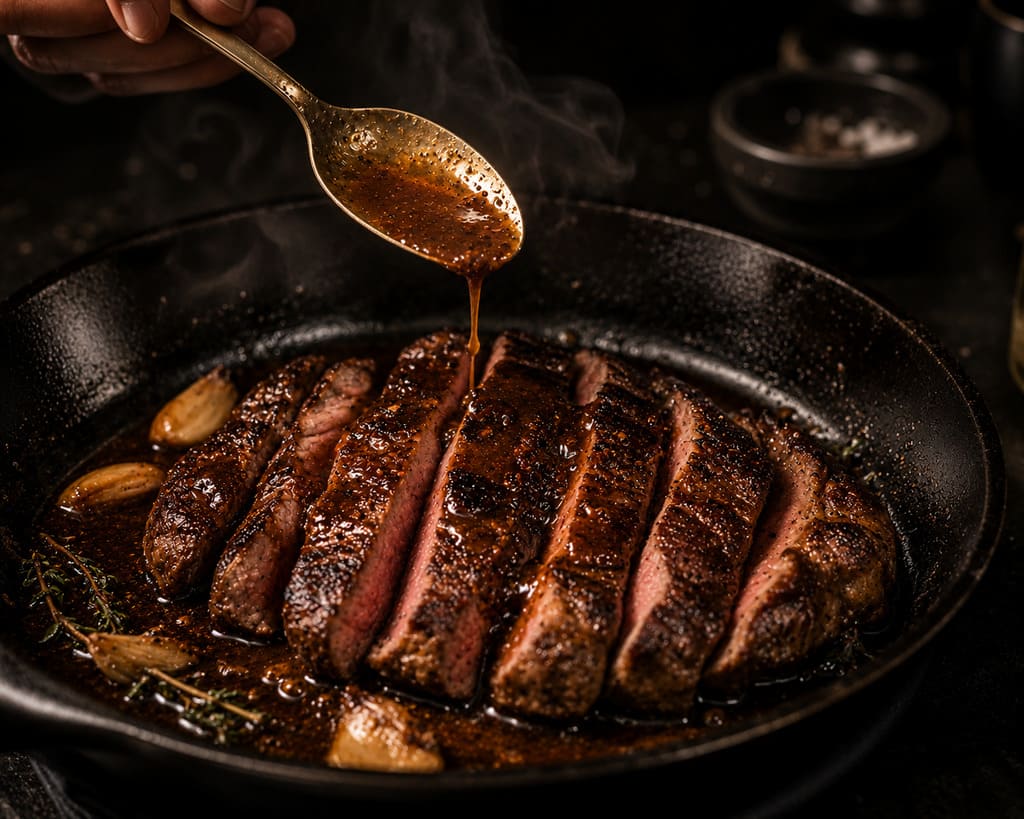
This gives you a restaurant-style sauce without cream, butter, flour, or sugar. It is one of the most useful techniques in a kosher low-carb kitchen.
Roasted Chicken with Schmaltz
Roasted chicken is simple, affordable, and flexible. Use thighs, legs, or a whole chicken. Save the schmaltz from the roasting tray and use it later for eggs, reheating meat, or building quick sauces. This is where kosher cooking naturally fits low-carb eating.
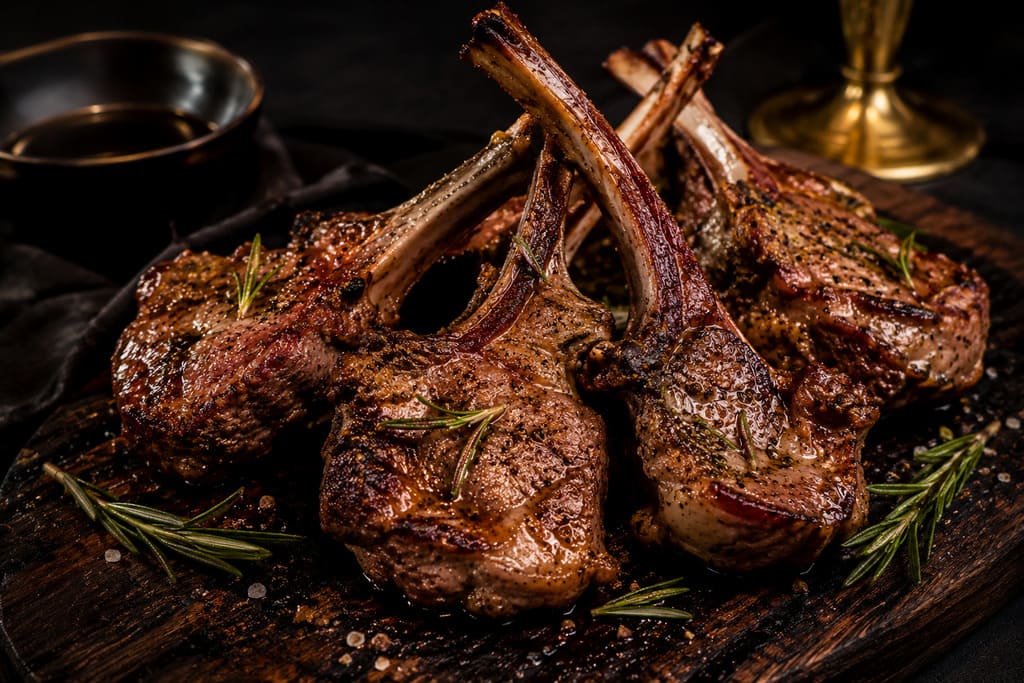
Lamb Chops with Simple Reduction
Lamb chops feel special but are still easy. Season with salt, pepper, garlic, and rosemary. Sear or roast until cooked properly, then serve with a reduced stock sauce. Keep the plate simple and let the lamb stay the focus.
Easy Low-Carb Fish Meals
Fish is a useful low-carb option when you want something lighter than beef or lamb. In a kosher kitchen, use kosher fish with fins and scales, and keep fish separate from meat meals.
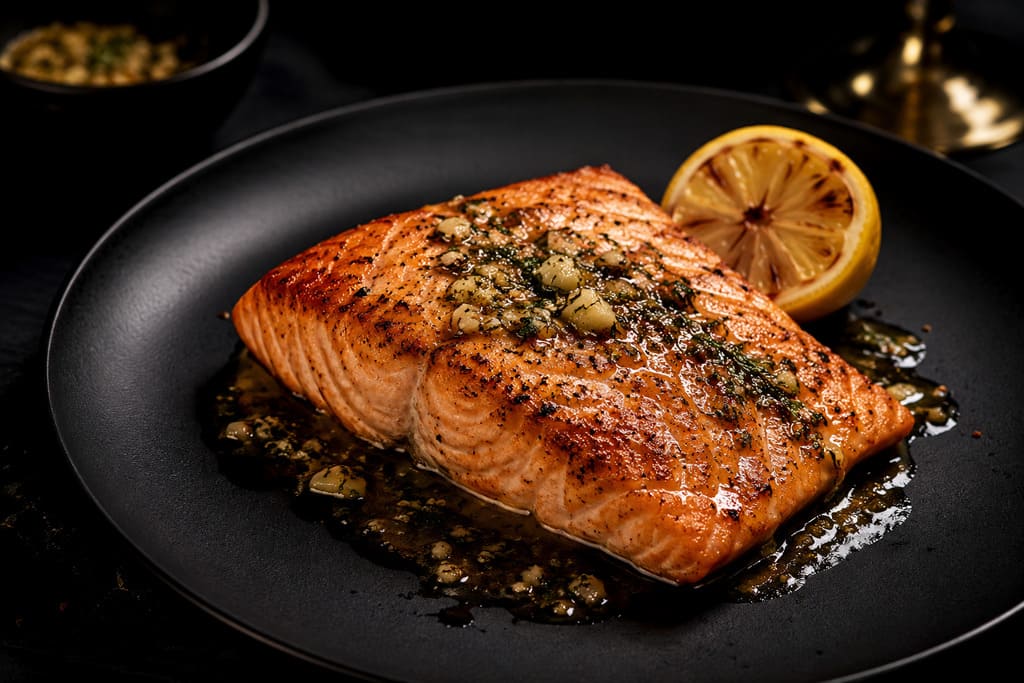
Crispy Salmon
Salmon is one of the easiest fish meals because it has enough natural fat to feel satisfying. Cook it skin-side down until crisp, then finish gently. Use olive oil, lemon, herbs, and salt instead of sugary sauces.
Sardines or Tuna Plate
For a quick lunch or emergency meal, canned fish can be very useful. Pair it with boiled eggs, olive oil, pickles, cucumber, or a small low-carb side. It is not complicated, but it keeps you away from high-carb convenience foods.
Low-Carb Meal Prep That Actually Helps
Meal prep does not need to mean cooking ten different recipes. The best low-carb meal prep is usually simple protein prep. If you have cooked meat, eggs, and stock ready, you can build meals quickly.
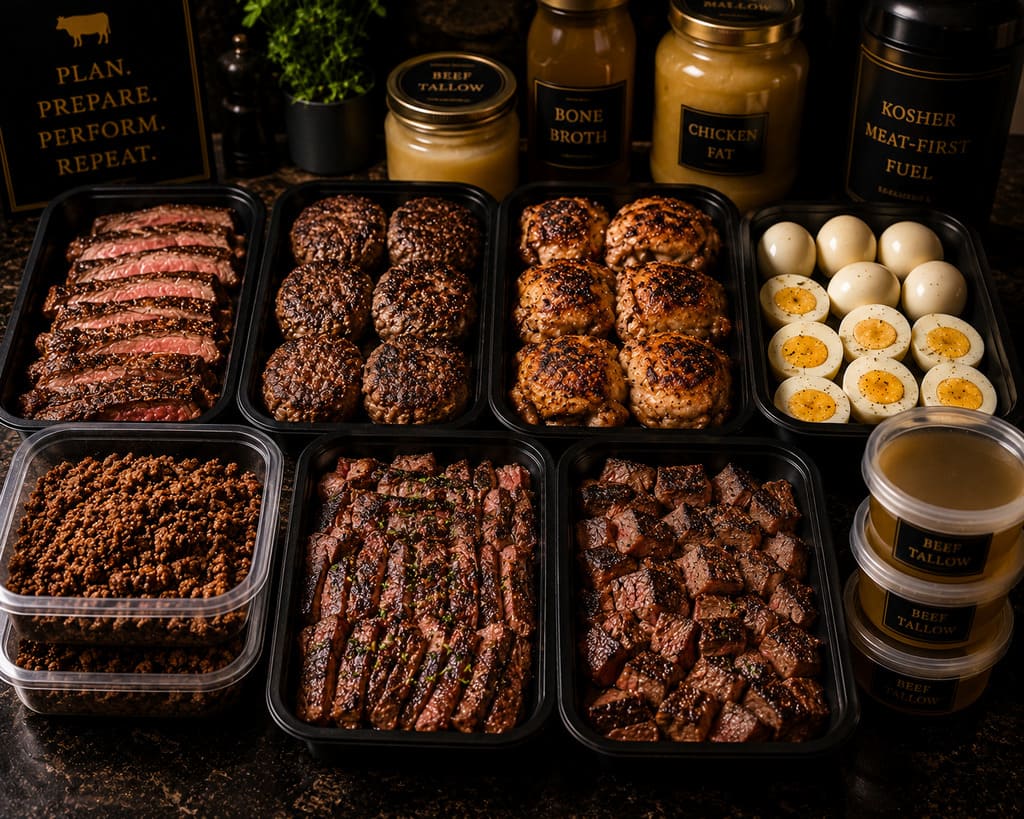
Cook Two or Three Proteins
Choose two or three proteins for the week. For example, cook burger patties, chicken thighs, and sliced steak. Add boiled eggs and a container of stock, and you already have the base for many meals.
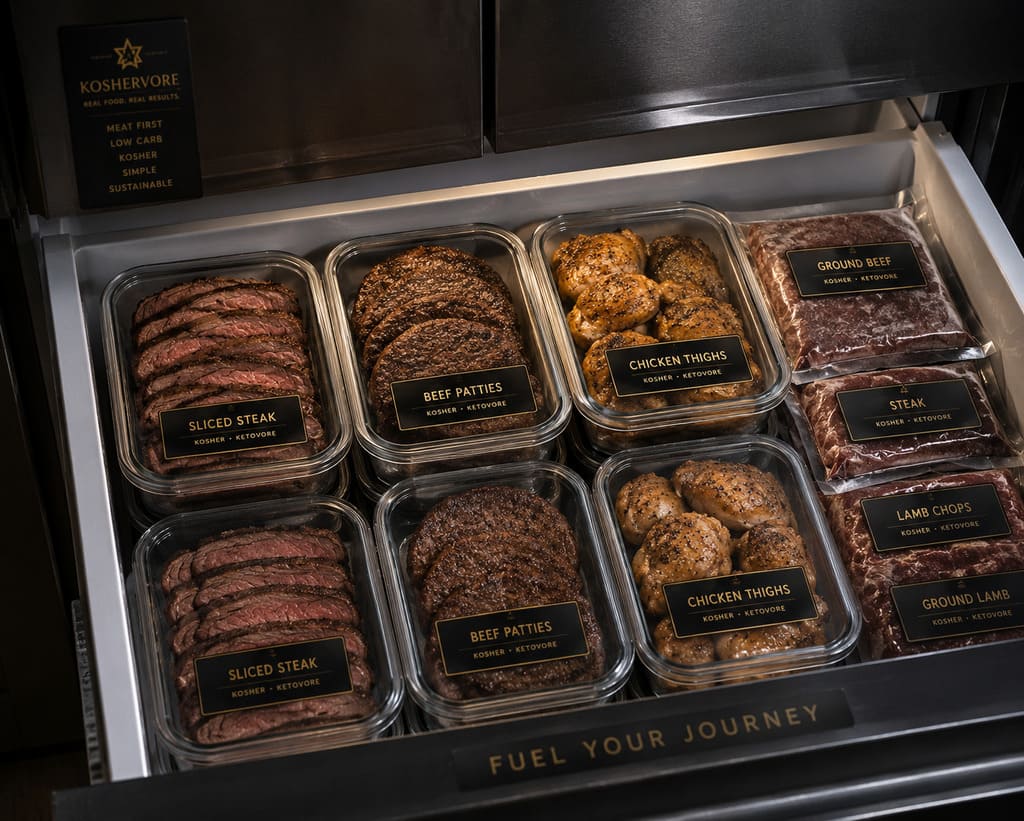
Use Freezer Containers
Freezer meal prep is especially useful when you do not want to cook every day. Keep portions of steak, chicken, patties, and broth ready. This makes low-carb eating easier when life gets busy.
Keep Stock Ready
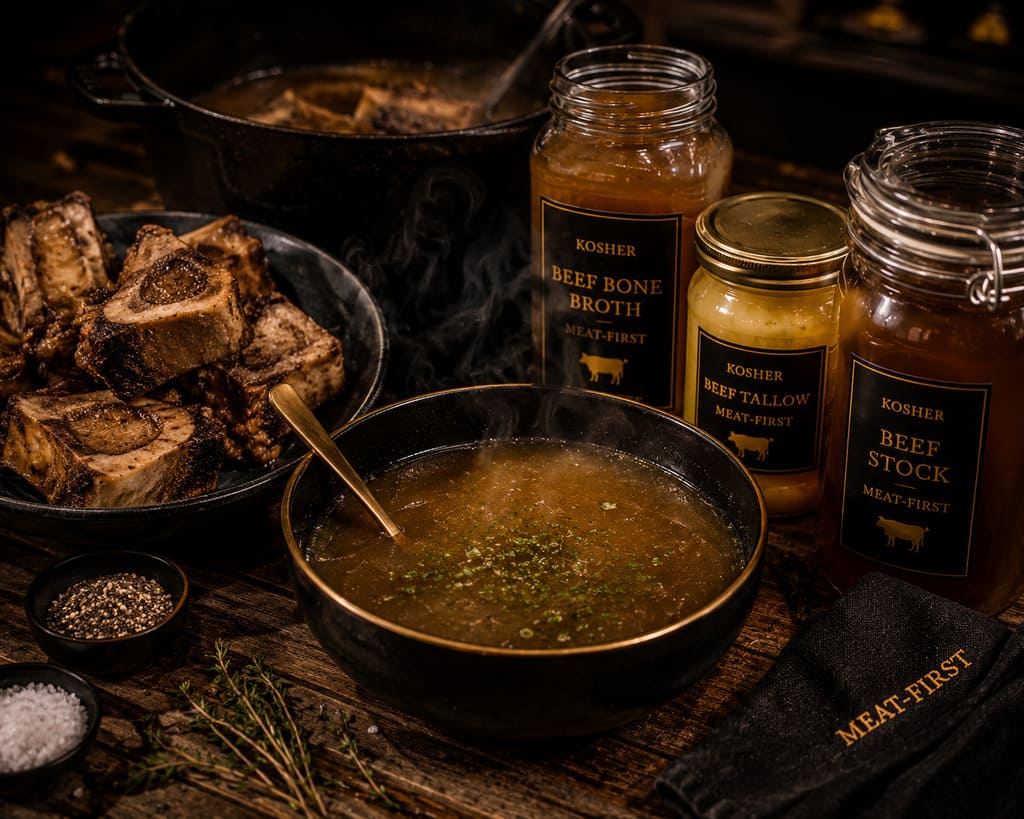
Stock is one of the most useful ingredients in the KosherVore kitchen. It can become bone broth, soup, pan sauce, or a quick way to add richness to cooked meat. A small amount of reduced stock can make a simple meal feel complete.
Easy Low-Carb Meals for Beginners
When you are starting out, do not try to change everything at once. Begin with repeatable meals. The goal is to reduce decision fatigue and make the next meal obvious.
- Burger patties with eggs
- Chicken thighs with schmaltz
- Ground beef skillet
- Steak with pan sauce
- Salmon with herb oil
- Bone broth with leftover meat
- Boiled eggs with tuna
These meals are simple, but they cover most of what you need: protein, fat, flavour, and flexibility.
Low-Carb Extras That Can Fit
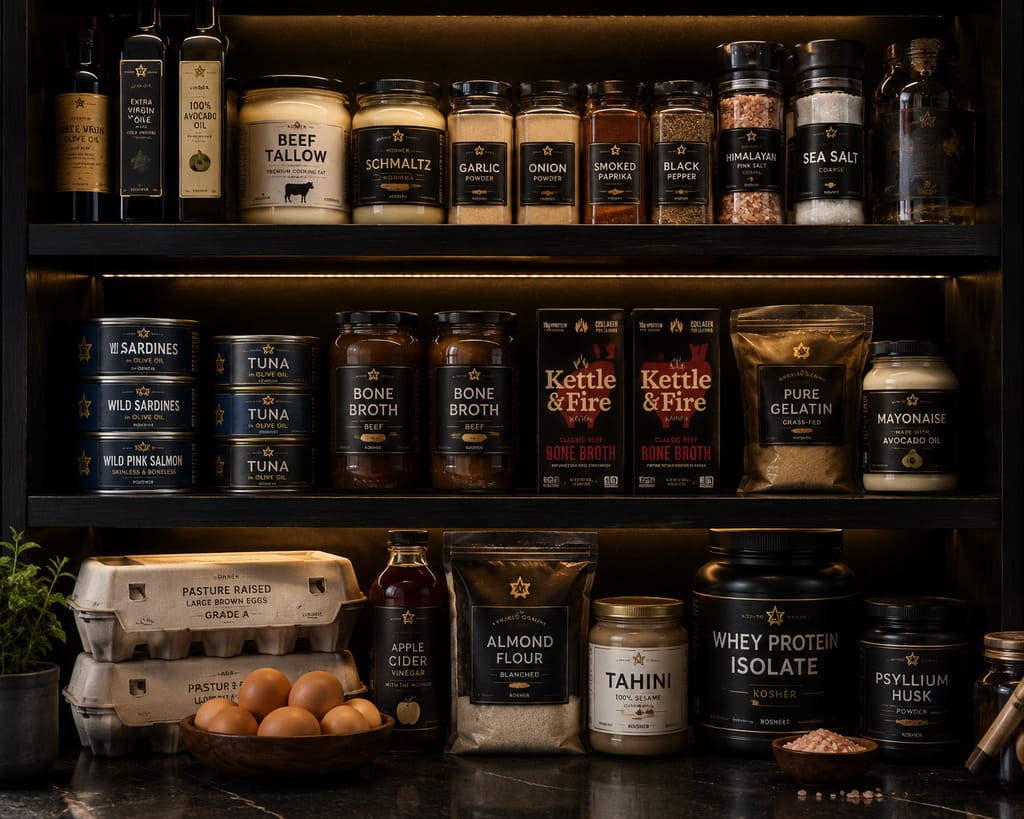
Low-carb does not have to mean zero-carb. Depending on your goals, you may include small amounts of avocado, cucumber, olives, herbs, lemon, leafy greens, or low-carb vegetables. The important point is that these extras should support the meal, not replace the protein.
If you are moving toward ketovore, keep plants smaller and protein larger. If you are doing a carnivore reset, keep meals stricter for a while and add foods back slowly to see what works for your body.
Common Low-Carb Meal Mistakes
Relying Too Much on Snacks
Low-carb snacks can be useful occasionally, but they should not become the foundation of your day. Meals built around protein are usually more satisfying than snacks built around sweeteners and replacement flours.
Forgetting About Fat
Low-carb meals can feel dry or unsatisfying if they are too lean. Add fat through cooking method, rendered fat, olive oil, stock reduction, or naturally fattier cuts of meat.
Making Every Meal Too Complicated
The easiest meals are the ones you can repeat. If every meal needs a long recipe, it becomes harder to stay consistent. Keep a few simple meals you actually enjoy and repeat them often.
Helpful KosherVore Guides
- Start Here
- What Is Ketovore?
- What Is Carnivore?
- Kosher Low-Carb Bread Guide
- Browse All Recipes
- Chicken Recipes
- Beef Recipes
Final Thoughts on Easy Low-Carb Meals
Easy low-carb meals are not about perfection. They are about building a repeatable way of eating that works in your actual kitchen. For a kosher home, that means using kosher proteins, keeping meat and dairy separate, avoiding ingredients that create doubt, and learning simple techniques that make food rich without complication.
Start with protein. Add fat. Use technique. Keep extras low-carb and intentional. That simple formula can carry you from basic low-carb meals all the way through keto, ketovore, and carnivore-style resets.
Ready to Make Low-Carb Easier?
Browse practical kosher low-carb recipes, meat-first meal ideas, and simple guides built for real life.
.kv-article-wrap{
width:100%;
background:#0f0f0f;
color:#f5efe4;
line-height:1.75;
overflow:hidden;
font-family:inherit;
}
.kv-article{
width:100%;
overflow:hidden;
}
.kv-hero{
min-height:650px;
background-size:cover;
background-position:center;
display:flex;
align-items:center;
padding:90px 6%;
}
.kv-hero-inner{
max-width:840px;
background:rgba(0,0,0,.55);
padding:42px;
border-left:4px solid #c7a24d;
border-radius:18px;
}
.kv-kicker{
color:#c7a24d;
text-transform:uppercase;
letter-spacing:2px;
font-weight:700;
margin:0 0 12px;
font-size:14px;
}
.kv-hero h1{
font-size:clamp(38px,5vw,68px);
line-height:1.08;
color:#fff;
margin:0 0 22px;
font-weight:800;
}
.kv-hero-text{
font-size:clamp(18px,2vw,24px);
color:#f5efe4;
margin:0 0 28px;
max-width:760px;
}
.kv-hero-buttons{
display:flex;
flex-wrap:wrap;
gap:14px;
}
.kv-btn{
display:inline-block;
padding:14px 24px;
border-radius:999px;
text-decoration:none;
font-weight:700;
transition:.25s ease;
}
.kv-btn-primary{
background:#c7a24d;
color:#111;
}
.kv-btn-secondary{
border:1px solid #c7a24d;
color:#fff;
background:rgba(255,255,255,.04);
}
.kv-btn:hover{
transform:translateY(-2px);
opacity:.94;
}
.kv-content{
max-width:1040px;
margin:0 auto;
padding:70px 24px;
}
.kv-intro{
font-size:21px !important;
color:#fff !important;
}
.kv-content h2{
font-size:clamp(30px,3vw,44px);
color:#fff;
margin:56px 0 18px;
line-height:1.2;
}
.kv-content h3{
color:#c7a24d;
font-size:clamp(22px,2vw,30px);
margin:36px 0 12px;
}
.kv-content p{
font-size:18px;
color:#eadfcd;
margin:0 0 22px;
}
.kv-image-card{
margin:38px 0;
overflow:hidden;
border-radius:22px;
border:1px solid rgba(199,162,77,.28);
background:#181818;
}
.kv-image-card img{
width:100%;
display:block;
height:auto;
}
.kv-note-box,
.kv-related,
.kv-cta,
.kv-final-cta{
background:#171717;
border:1px solid rgba(199,162,77,.35);
border-radius:20px;
padding:34px;
margin:48px 0;
}
.kv-cta,
.kv-final-cta{
background:linear-gradient(135deg,#1a1a1a,#2b2112);
}
.kv-note-box h2,
.kv-related h2,
.kv-cta h2,
.kv-final-cta h2{
margin-top:0;
}
.kv-list{
padding-left:24px;
margin:0 0 24px;
}
.kv-list li{
margin-bottom:10px;
color:#eadfcd;
font-size:18px;
}
.kv-related ul{
padding-left:24px;
margin-bottom:0;
}
.kv-related li{
margin-bottom:10px;
color:#eadfcd;
font-size:18px;
}
.kv-conten